Equipment & Tools Reference
The purpose of this page is to catalogue the core equipment categories relevant to home latte art experimentation, describe the variables each tool introduces, and note which specifications tend to matter when attempting to isolate a single variable in a controlled pour. This is not a buying guide — it is a reference for understanding how each piece of equipment interacts with the processes described across the rest of this site.
Steam Wands and Espresso Machine Steam Systems
The steam wand is arguably the most consequential variable in milk texturing, because it determines two things simultaneously: the rate of air incorporation and the degree of convective circulation within the pitcher. Machines broadly fall into three categories relevant to home use:
- Single-boiler espresso machines — these share a boiler between brewing and steaming, which means steam pressure is often lower and less consistent (typically 1.0–1.5 bar at the wand tip). The result is a slower texturing process, which can actually be forgiving for beginners, though it makes reproducing exact microfoam densities between sessions more difficult.
- Heat-exchange and dual-boiler machines — these provide dedicated steam at higher, more stable pressures (often 1.5–2.0 bar). The faster steam delivery allows finer control over microfoam when technique is consistent.
- Standalone milk steamers and attachments — devices like the Bellman stovetop steamer generate steam independently of the espresso machine. Pressure regulation is less precise, but they can be useful for isolating steaming experiments from espresso extraction variables.
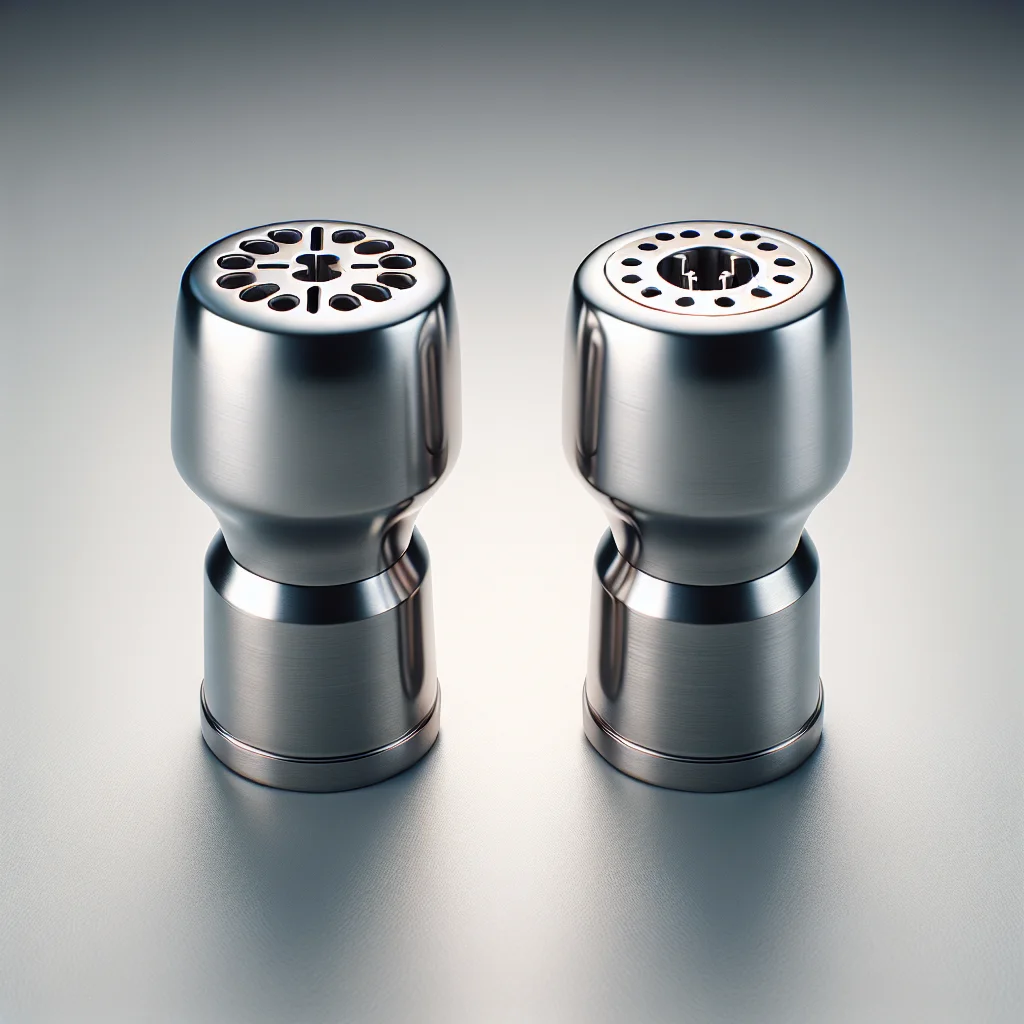
Wand tip geometry matters more than many users expect. A single-hole tip produces a focused jet that generates rapid rotation but introduces air slowly; a multi-hole tip (commonly two or four holes) disperses steam more broadly, tending to incorporate air faster at the cost of some vortex definition. When comparing results across experiments on this site — particularly in the temperature and steam pressure tests — the wand configuration should be treated as a controlled constant.
Pitchers
Pitcher shape influences pour rate, stream width, and the barista’s ability to position the spout precisely relative to the cup surface. The two most common profiles are:
- Standard (rounded) spout — produces a wider stream that is somewhat harder to direct into fine detail work but distributes milk evenly for foundational patterns like the heart.
- Sharp (pointed) spout — narrows the stream, which tends to improve definition in multi-layer patterns such as tulips and rosettas.
Pitcher volume matters primarily because it determines how much dead space exists above the milk. A 350 ml (12 oz) pitcher filled to roughly 40–50% capacity leaves sufficient room for the milk to circulate during steaming without splashing, while a 600 ml (20 oz) pitcher at the same fill ratio produces a larger volume of textured milk — useful if multiple pours are planned from a single steaming session. Material (almost always stainless steel at this level) has a minor effect on heat transfer rate during steaming, but the difference between 18/8 and 18/10 stainless grades is negligible for practical purposes.
Measurement and Diagnostic Tools
Repeatable experiments require repeatable measurements. The following tools appear frequently throughout the site’s experiment documentation:
- Instant-read thermometer — a probe-style thermometer (response time under 3 seconds) allows monitoring of milk temperature during and after steaming. The target window for most latte art pours is 55–65 °C; readings outside this range correlate with changes in microfoam stability (discussed further in the milk type experiments).
- Kitchen scale (0.1 g resolution preferred) — used to measure milk volume by mass before steaming and to quantify how much air was incorporated by weighing the pitcher before and after.
- Stopwatch or timer — steaming duration and pour duration are recorded to the nearest second in most experiments on this site, since even a two-second variation in steam time can shift foam density noticeably.
- Smartphone camera with consistent framing — not a scientific instrument, strictly speaking, but documenting pours from a fixed angle and distance makes visual comparison between trials far more reliable.
Closing Notes
No single piece of equipment determines the outcome of a pour — it is the interaction between steam pressure, pitcher geometry, milk properties, and technique that produces (or fails to produce) defined latte art. Understanding what each tool contributes helps when designing experiments with only one variable changing at a time. For a walkthrough of how to set up that kind of controlled comparison, the beginner’s guide is a reasonable starting point, and the glossary defines many of the technical terms used throughout this page.